Does Spray Foam Work as Insulation on a Metal Roof?
This article is adapted from Mikel Wallesen's video above.
Read the video transcript
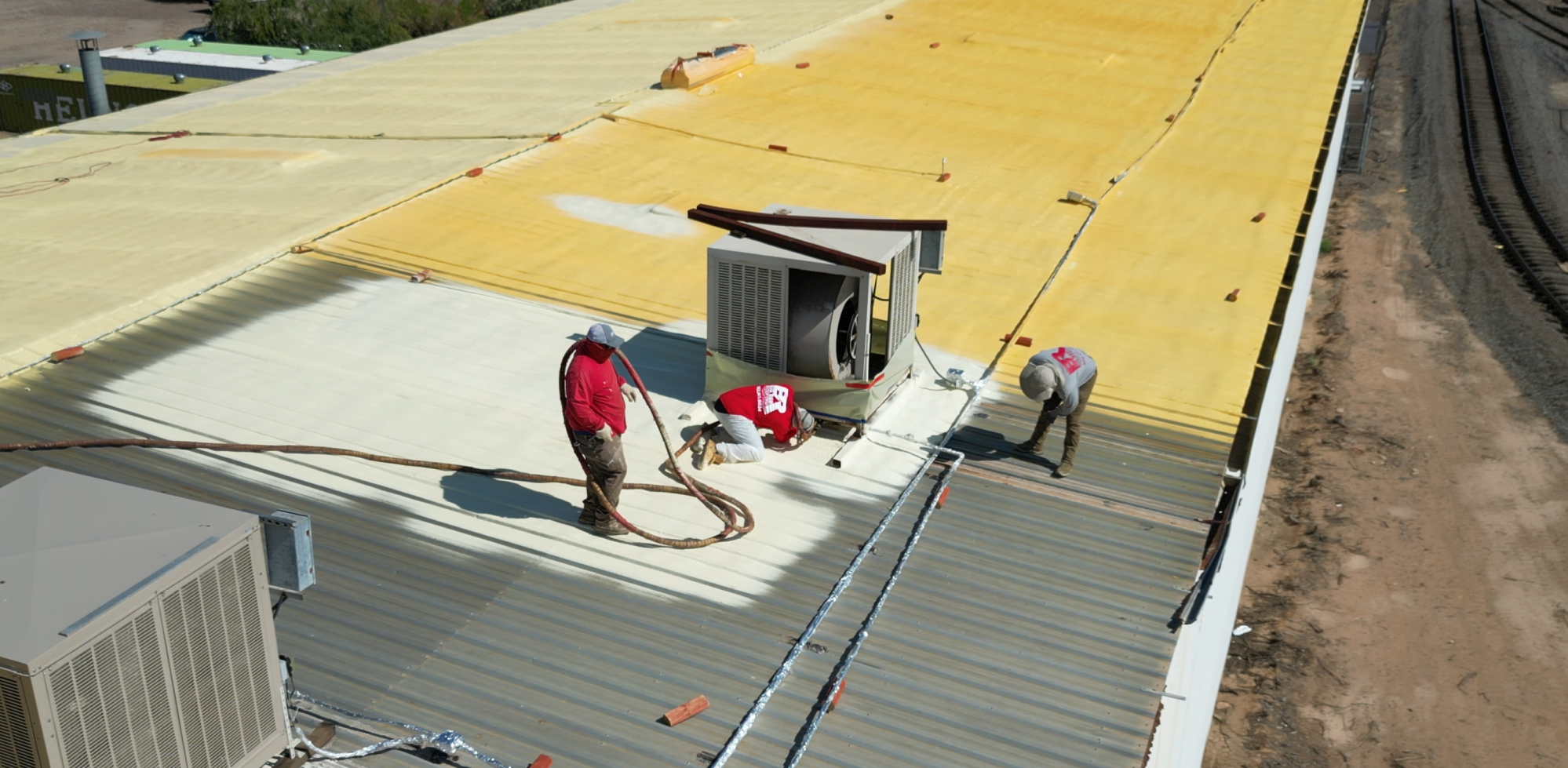
Yes, and for metal buildings in Scottsdale, Paradise Valley, and the high-end North Phoenix and Desert Ridge areas, it's the best insulation option available. Spray foam bonds directly to the metal, seals every seam and fastener in the process, and cuts interior heat gain more effectively than any other roof-mounted system we install.
Metal doesn't insulate on its own. It conducts heat straight through the panel, which is why an uninsulated metal roof can push a building's interior into the 120s on a normal Arizona afternoon. On one job we did in North Scottsdale, the inside of the building was sitting at 125 to 135 degrees before we ever touched the roof. That's a common story across the North Scottsdale and Paradise Valley properties we work on, where a lot of metal roofs sit exposed to direct sun with no insulation underneath. Spray foam is the fix, and I think it's not a close call. To see how much cooler one metal building got, read our post on commercial spray foam roofing on a metal building in Scottsdale.
Why is spray foam better than other metal roof insulation?
Because it's the only option that insulates and seals the roof at the same time, in one continuous layer with zero seams.
Batt insulation, rigid board, radiant barriers, none of them bond to the roof itself. They sit underneath it, which means every seam, lap, and fastener penetration in the metal is still a gap the heat and water can find. Spray foam is applied as a liquid directly onto the panels. It expands on contact and cures into one solid, seamless layer that covers every seam and every screw head on the roof. There's no gap for heat to sneak through and no gap for water to get in either. That's the difference. You're not adding insulation next to the roof, you're turning the roof itself into the insulation and the seal.
How thick does the foam need to be?
Most jobs run around two inches, but it depends on how bad the heat problem is and what's underneath the roof.
On that North Scottsdale project, two inches was the right call given how hot that building was running. Thickness gets adjusted based on the roof's sun exposure, the building's use, and how much heat reduction the owner actually needs. More foam means more insulation value, but it also means more cost, so the goal is matching the thickness to the problem, not just defaulting to the thickest option available.
Do you need a reflective coating on top of the foam?
Yes. Foam blocks heat from moving through the roof, but the coating stops the roof from absorbing that heat in the first place, and skipping it is a mistake.
Once the foam cures, it gets a base coat and then a top coat of high-reflective white. On our jobs, that's typically an Energy Star rated base coat with a white reflective finish over it. Without that coating, the roof surface still heats up in direct sun, and the foam has to work harder to block heat that a reflective surface would have bounced away for free. The foam and the coating are a system. Doing one without the other leaves real performance on the table.
Is spray foam worth it for my Scottsdale or Paradise Valley property?
If you have a metal roof in Scottsdale, Paradise Valley, or North Phoenix and you're dealing with high interior temperatures, climbing cooling costs, or leaks at the seams, spray foam solves all three at once, and I'd put it ahead of any other fix on the table.
Warehouses, shops, barns, garages, guest houses, and any metal-roofed space where people or equipment sit underneath the roof are the clearest cases, and we see all of these regularly across Scottsdale, Paradise Valley, and Desert Ridge. If your roof is already in good shape and heat isn't costing you anything, it's a lower priority. But for most metal buildings we look at in these areas, the heat and the leaks are already a problem, the owner just hasn't connected it back to the roof yet. Curious what it would run for your building? Our online estimate tool will get you a number in a few minutes.
How long does a spray foam roof actually last?
Decades, as long as the coating gets recoated on schedule, which is typically every ten to twenty years.
The foam itself doesn't wear out under normal use. The coating on top is what takes the UV and weather exposure over time, so that's the part that needs periodic recoating to keep protecting the foam underneath it. Owners who stay on that recoat schedule get a roof system that keeps performing for the life of the building. Owners who skip it eventually let the coating degrade to the point the foam underneath starts taking damage it was never designed to take.
What are the warning signs your metal roof needs this?
Rising interior temperatures, cooling costs that keep climbing, and rust or staining around the seams are the three signs worth acting on.
Any one of those on its own is worth a look. All three together mean the roof is actively costing you money and it's only going to get more expensive to ignore. If that sounds like your Scottsdale, Paradise Valley, or North Phoenix property, get a number from our online estimate tool and we'll take it from there.
Big Red Roofing installs spray foam roofing systems on metal roofs across Scottsdale, Paradise Valley, North Phoenix, and Desert Ridge.