Why This 30-Year-Old Roof Needed New Underlayment
This article is adapted from Mikel Wallesen's video above.
Read the video transcript
What We Found On This Scottsdale Home
This house in Central Scottsdale is about 30 years old. From the ground the tile looked fine, and honestly the tile itself was still in good shape. That is the thing most homeowners do not realize about a tile roof in Arizona. The tile is not the part that keeps water out of your house. The underlayment underneath it is.
After three decades of Arizona sun, that underlayment was done. Dried out, brittle, cracking when you touched it. It had given the owners a long run, but it was time.
Why Underlayment Dries Out Faster Here
Arizona is one of the hardest climates in the country on a roof. We get extreme heat for months at a time, monsoon storms, and very little in between. All of that heat cycles the roof deck every single day, and the underlayment sitting under the tile takes the brunt of it.
Most of the older felt papers were never built for a 30-year run under Arizona tile. They dry out, lose their flexibility, and eventually crack. Once that happens, water has a path into the wood deck and into the house. You will not see it right away. By the time a stain shows up on a ceiling, water has usually been getting in for a while.
If your tile roof is 20 to 30 years old and has never had the underlayment replaced, you are on borrowed time. Not tomorrow, not next month, but soon.
What A Proper Underlayment Replacement Looks Like
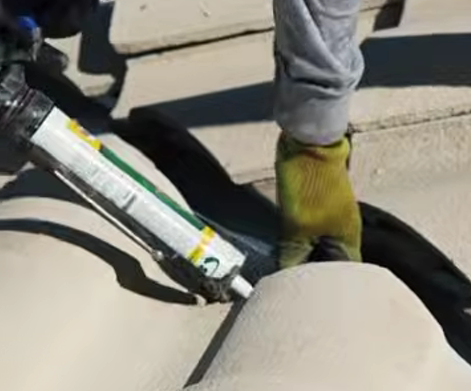
On this house we are going back with a two-layer Westlake Royal Ply 40 across the entire roof. That is a synthetic underlayment built for tile applications in hot climates. Two layers, fully installed, is the standard we hold ourselves to on a job like this.
Here is the sequence we ran on this project:
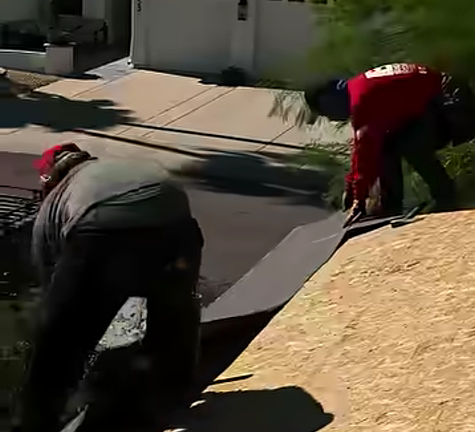
- Carefully remove and stack the existing tile so we can reuse it.
- Strip the old, dried-out underlayment down to the deck.
- Inspect the wood decking for any soft spots or damage.
- Install the first layer of Royal Ply 40.
- Install the second layer over the first for full redundancy.
- Reload and reset the original tile.
Because the tile itself is still sound, the homeowner does not have to pay for new tile. They get another 30-plus years of life out of the roof for the cost of the underlayment and the labor to do it right.
Why We Never Leave A Roof Exposed Overnight
You will notice on our jobs we load and reset tile in the same sequence we tear off. That is on purpose. We do not want a customer's home sitting open at night. Weather in Arizona is not always what the forecast says, and a surprise storm on an exposed deck is a bad day for everyone.
Every section we open, we close before the crew leaves. That is how we protect the house while the work is in progress.
When To Call Us Out For A Look
If any of this sounds like your home, it is worth getting a set of eyes on it:
- Your tile roof is 20 years old or older
- The underlayment has never been replaced
- You have seen any staining on ceilings or in the attic
- Tiles are slipping or cracked in more than a few spots
We do free inspections. We will walk the roof, pull a few tiles if we need to, and tell you honestly where you stand. If you have time before you need to do anything, we will tell you that too.
Give us a call at Big Red Roofing when you are ready. We will take good care of your house.