How Should the Final Coat on a Spray Foam Roof Be Applied in Scottsdale?
This article is adapted from Mikel Wallesen's video above.
Read the video transcript
The final coat on a spray foam roof in Scottsdale should go on slowly, to a measured thickness of 26 to 28 mil, with the spray machine running at about 1,600 to 1,800 PSI. That works out to a gallon and a half of coating for every 100 square feet. At Big Red Roofing we treat those numbers as the job, and we don't rush the last coat of a spray foam roof.
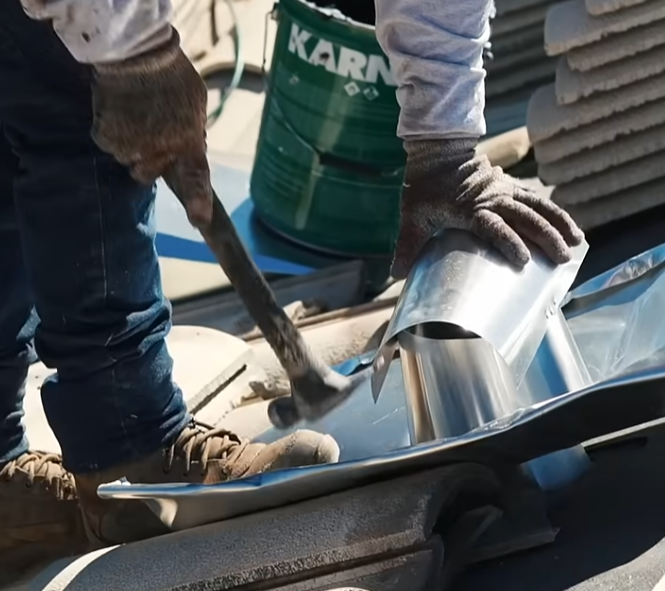
In the video I'm spraying the final coat, and the thing to watch is my hand. It's moving slow on purpose. As I say on the roof, "If you go too fast, if you get going like this, you're spraying a lot of coating all over the place."
That one line covers most of what goes wrong with roof coatings. Below I'll walk through what we aim for, why we aim for it, and what you should ask any contractor before they coat your roof.
What thickness should a spray foam roof coating be?
On this final coat we're aiming for 26 to 28 mil. That's a measured target, and we hit it by putting down a gallon and a half of coating per 100 square feet.
A mil is a thousandth of an inch, so nobody can judge it by looking from the driveway. That's why I tie the thickness to a coverage rate. If I know the square footage of the roof, I know how much coating has to go on it to reach 26 to 28 mil. When I'm up there, I'm not just covering the roof until it looks white. I'm building a specific thickness across the whole surface.
The problem is that a thin coat and a correct coat can look the same on the day the crew leaves. The difference shows up later. If someone stretches the material to save time or product, the roof gets less protection than it was supposed to get, and the homeowner has no way to know. So ask any contractor two things: what mil thickness are you targeting, and what coverage rate gets you there? If they can't answer both, that tells you something.
Why do you have to spray the final coat so slowly?
You go slow because the spray pattern only lays down properly at a controlled pace. A fast hand throws coating everywhere except where it belongs and leaves the thickness uneven.
You can see it in the footage. You have to go pretty slow across these sections to get the proper pattern. When the gun moves too fast, the coating doesn't land in an even band. Some of it ends up in the air, some lands heavy in one spot, and the next spot gets less than it needs. That's the "coating all over the place" I'm talking about in the video.
Going slow takes discipline, especially on a big roof in the heat. It's tempting to speed up and get off the roof. I get it. But the final coat is the wrong place to make up time. Speed here costs you material and thickness at the same time. If a crew finishes a coating job much faster than you expected, it's fair to ask how they confirmed the thickness.
Why does machine pressure matter when coating a spray foam roof?
The best result comes when the machine is running at about 1,600 to 1,800 PSI down below. Outside that range, the spray pattern suffers no matter how good the person on the gun is.
The machine sits down below while I'm working up on the roof. In the video I say that's when you're getting the best result, when it's in that 1,600 to 1,800 PSI window. The pressure is what turns the coating into a clean, even spray at the tip of the gun. Good technique on the roof depends on the equipment on the ground doing its part.
When pressure is off, you can move your hand exactly right and still get a poor pattern. That's why I don't think of coating as only a hand skill. It's the person on the roof and the setup on the ground working together. A common shortcut is to set the machine once and never look at it again. Ask your contractor what pressure they run their coating at and how they keep an eye on it during the job.
What does a rushed final coat cost a homeowner?
A rushed final coat leaves thin spots that you can't see but the roof will feel. It's one of those small installation shortfalls that turns into a bigger problem down the road.
The way I see it, most roof problems don't start with something dramatic. They start with a small step that got skipped or hurried. We wrote about that pattern in How A Small Roofing Mistake Turns Into A Leak. A coat that went on too fast fits right in that category. It looks finished. It just isn't finished the way it should be.
Here's how it usually happens. The foam is down, the prep is done, the day is getting hot and the crew is tired. The coating gets sprayed fast so everybody can pack up. Nobody checks the coverage, nobody watches the pressure, and the homeowner is told the job is done. Then the thin areas end up being the first places that need attention. Fixing a coating problem after the fact is always more trouble than doing it right while the rig is already set up.
How does the final coat fit into the rest of a spray foam roof system?
The final coat is the top layer of the system, the surface that faces the sun and weather every day. Every layer below it depends on that coat being complete and even.
A spray foam roof is built in layers, and each one has a job. The foam goes on first, then the coating layers protect it. We go into the earlier steps in our post on how professional roofers protect metal spray foam roofs with base coats and glare control. The final coat is what finishes that work, which is why I won't let it be the step we hurry.
If you want to see the full process, What Happens When You Spray Foam a Metal Roof walks through it from start to finish. You can also look at a finished job on our new construction spray foam roof project. One thing to watch for with any contractor: if they talk a lot about the foam and say very little about the coating, ask more questions. The coating is half the story.
Why does coating quality matter so much on Scottsdale roofs?
Scottsdale roofs take hard sun and heat, and the coating is the surface that takes it. In this climate, a spray foam roof coating has to be done right the first time.
A lot of people come to spray foam because of heat. We covered the insulation side in how top-side spray foam insulation dramatically lowers metal roof temperatures. The coating is what sits on top of that foam and faces the weather, so the work underneath is only as protected as that last coat.
The Arizona sun doesn't forgive an uneven coat. Thin spots get the same exposure as the thick ones, with less material to take it. That's why I'd rather spend the extra time on the final pass than come back later. When you're comparing bids, don't just compare the price. Compare what each contractor says about thickness, coverage rate and spray pressure. The answers will tell you who's planning to slow down on the last coat.
What happens when you call Big Red Roofing about your project?
When you call Big Red Roofing at 602-799-6837, you get a family-owned Scottsdale roofing company that will look at your spray foam roof and tell you straight what it needs. We aren't a volume outfit, and we don't rush the work or the people we work for.
I took over this business from my father, and we've been Scottsdale Roofers Since 1987. We're Licensed AZ ROC #276008 with a BBB A+ rating, and the business grew on word of mouth. You can read more about the family on our About page and more about me on my owner page. For details on the service itself, see our spray foam roofing page and our spray foam roofing in Scottsdale page.
The easiest way to start is our roof estimator. Tell us about your roof, and for cost questions check our pricing page, since every roof is different and I won't guess in a blog post. From there we set a time to look at the roof and explain what we'd do and why. We work across Scottsdale and nearby cities, including Paradise Valley, Phoenix, Fountain Hills, Tempe and Mesa.
Frequently asked questions: what else do Scottsdale homeowners want to know?
How much does a spray foam roof coating cost in Scottsdale?
It depends on the size of the roof, its condition and what the job needs. We don't put prices in blog posts. Start with our estimator and our pricing page, and we'll give you real answers for your roof.
How long does it take to apply the final coat on a spray foam roof?
It depends on the size and layout of the roof. What I can tell you is that we spray the final coat slowly on purpose, because a controlled pace is how you get the right pattern and the 26 to 28 mil thickness. Once we see your roof, we'll walk you through the schedule.
What thickness should a spray foam roof coating be in Scottsdale?
On the final coat in this video we're targeting 26 to 28 mil, which comes from a gallon and a half of coating per 100 square feet. Whoever you hire, ask them what thickness they're targeting and how they measure coverage. A good spray foam roofer in Scottsdale should be able to answer both right away.
Are there alternatives to a spray foam roof?
Yes. Big Red Roofing also does tile roofing, including underlayment replacement and full tear-off, shingle roofing and commercial and metal roofing. The right choice depends on your home or building. If you're not sure whether you need a full replacement, read Do You Really Need To Replace The Whole Roof?
Does a coated spray foam roof need maintenance?
Every roof does better with regular attention, especially in Arizona. Having your spray foam roof looked at means small issues get caught before they grow. If you can't remember when your roof was last checked, call us at 602-799-6837.
How does Arizona heat affect a spray foam roof coating?
The coating is the surface that takes the sun and heat every day, so it has to go on even and to full thickness. Thin spots get the same exposure with less material to protect the foam underneath. That's why we take our time on the final coat on Scottsdale roofs.
Do you coat spray foam roofs outside Scottsdale?
Yes. We're based in Scottsdale and also serve Phoenix, Paradise Valley, Mesa, Chandler, Carefree, Cave Creek, Fountain Hills, Gilbert, Glendale, Peoria and Tempe. You can find your city on our service areas page.
How do I get started with Big Red Roofing?
Reach out through our contact page or call 602-799-6837. You can also run the estimator first so we have the basics on your roof. We'll take it from there.